017
Nikola VII Zrinski; conflict between Drašković and Zrinski; Baroque room, second floor
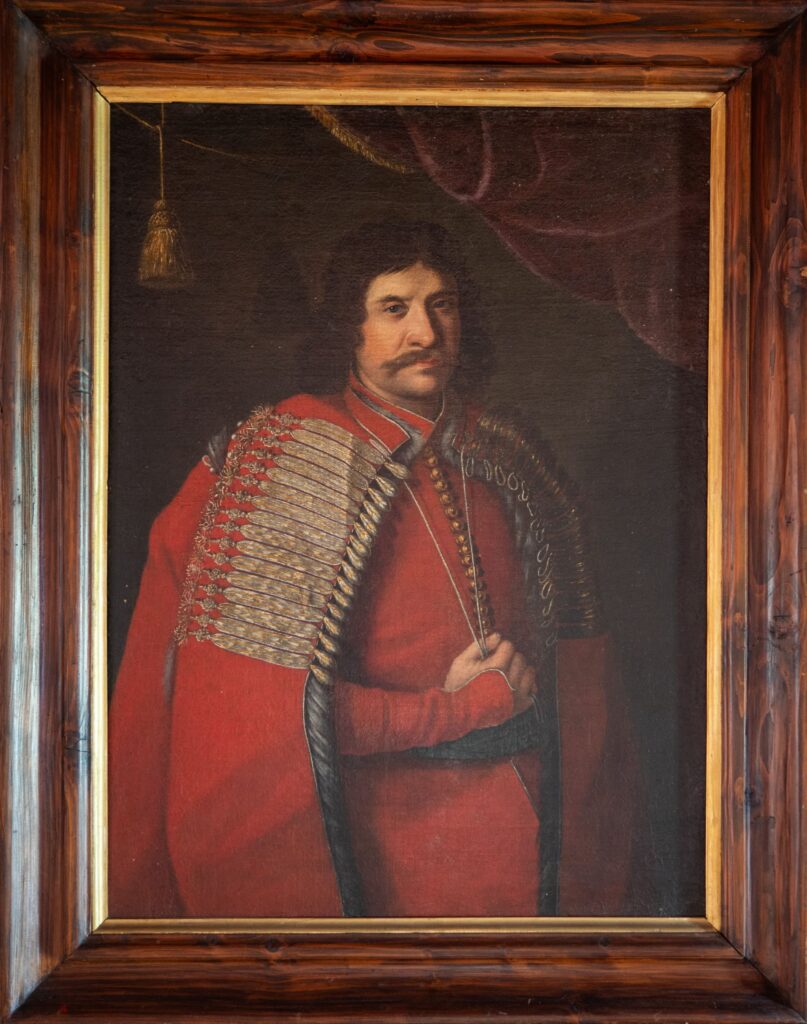
Portrait of Nikola VII Zrinski (1620 – 1664), unidentified painter, second half of the 17th century,
oil on canvas, 111 x 83.5 cm, inv. no. DT 997
In the mid-17th century, the Drašković family briefly lost the Trakošćan estate. Gašpar III (1605 – 1668) was the only male heir of Petar’s branch and held large estates, with his wife Anna Veronica Eibesfeld he had a daughter, Eusebia. According to the marriage contract between Eusebia and Nikola VII Zrinski (1620 – 1664), she was to give some estates as a dowry, including a part of Trakošćan and Klenovnik. The contract stated that if Nikola died without descendants before Eusebia, the estates could be bought by Zrinski, and if Eusebia died before that, the estate was to be returned to her father. The wedding took place in 1645 in Klenovnik and until then the marriage contract was a secret. When the other members of the Drašković family found out about this, a family scandal broke out because Trakošćan and Klenovnik were estates by hereditary right and could not be transferred through the female lineage. Upon the death of Eusebia, the situation became more complicated because Gašpar expected the return of the estate, but Eusebia wrote a will in marriage. Zrinski did not intend to return the estates and Gašpar III took them by force. Then Zrinski attacked and
reconquered Trakošćan with his private army. The dispute was resolved only through the mediation of King Ferdinand III (1608 – 1657), so that Zrinski returned the estates and
Gašpar settled the accounts. It is assumed that Trakošćan suffered significant damage in that conflict.